
Description
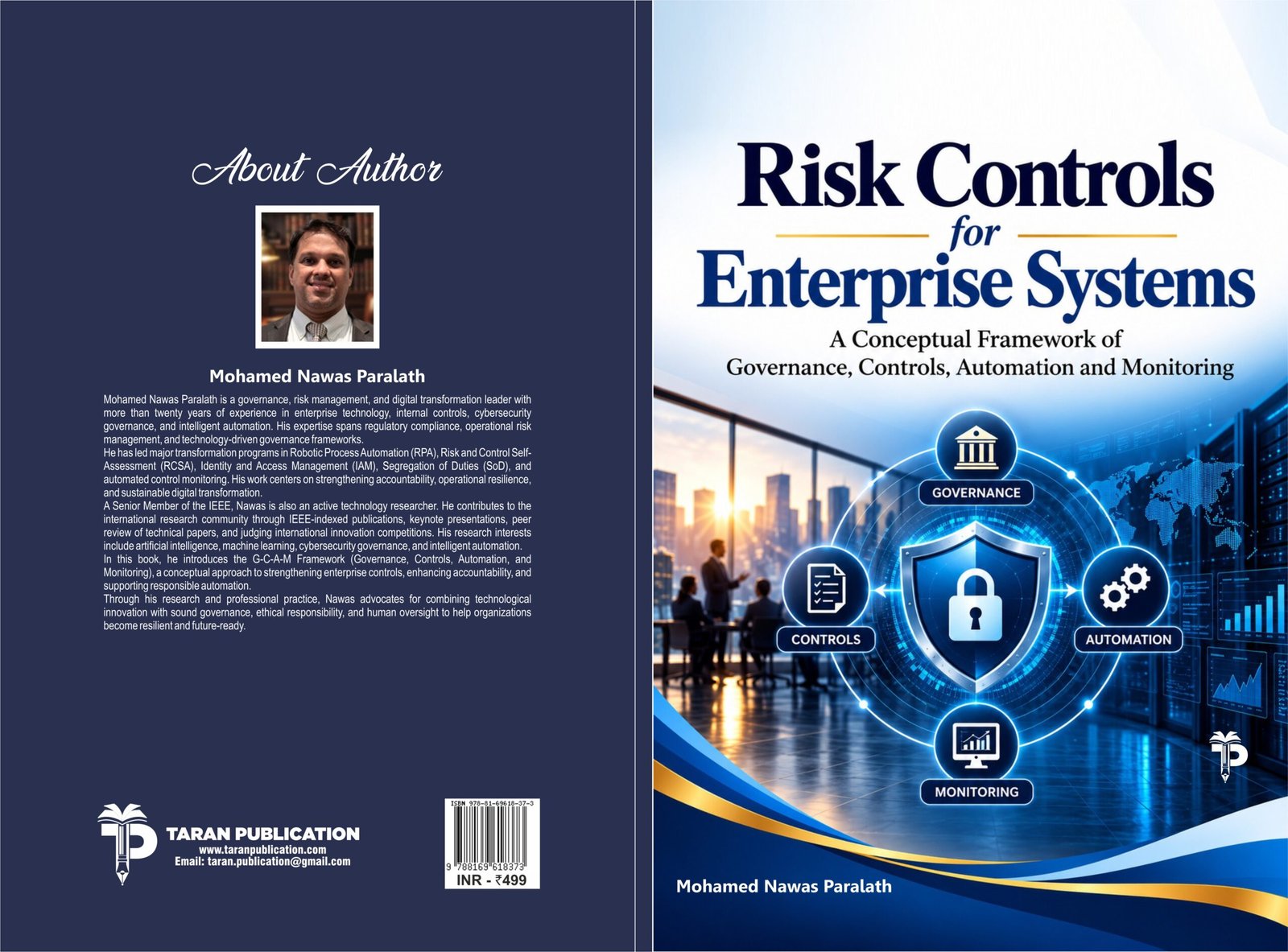
Enterprise platforms such as human resources, payroll and finance systems combine sensitive data, financial authority and operational dependency, yet the controls that protect them frequently fail quietly: through missing ownership, vague control descriptions, processes that drift from their documentation, evidence assembled only for audits and automation applied to unstandardized processes. This book proposes a conceptual framework, G-C-A-M, that organizes the design and operation of controls in enterprise systems into four sequential and iterative stages: Governance, Controls, Automation and Monitoring. It examines control self-assessment, identity and access governance, segregation of duties, privileged access, process automation, continuous monitoring and audit readiness, and extends the framework to AI-enabled processes. The treatment draws on established standards and literature in internal control, access control and risk management. The framework is presented as a proposal for further testing and empirical validation.
Keywords: internal control; governance; risk and control self-assessment; identity and access management; segregation of duties; robotic process automation; continuous monitoring; audit readiness; AI governance.


Reviews
There are no reviews yet.